Green energy can drive sustainable growth across South Asia
Green energy?
Energy, along with the innovation, investment, and growth it drives across the economy, is at the core of development. In South Asia, decarbonizing the energy sector is key to achieving sustainable growth. The energy sector is the region’s largest source of greenhouse gas emissions, contributing to air pollution, a high disease burden, and potentially hindering economic growth, especially as energy demand continues to rise and reliance on imported fossil fuels remains high. South Asia imports about two-thirds of its energy needs. With global energy prices surging due to the war in Ukraine, decarbonization has become even more critical.
Renewable energy
Renewable energy is a key component of the transition to green energy. It is safe and affordable, helping countries build resilience against price volatility, reduce energy costs, and mitigate climate change.
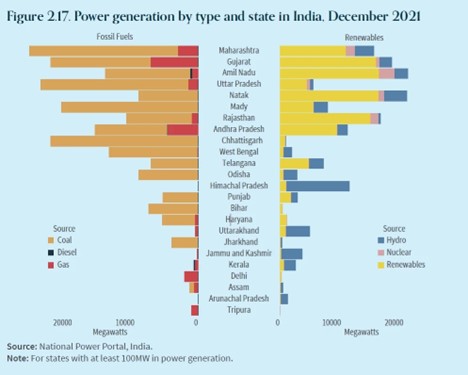
Although South Asia has enormous renewable energy potential, only Bhutan and Nepal rely primarily on renewable sources for their energy supply. However, Nepal still depends heavily on imported petroleum products for transport. Other countries continue to rely on fossil fuels, despite the rapid growth of solar and wind markets in India.
A full transition from fossil fuels to renewable energy will require strong policy and financial frameworks, including phasing out coal-fired power plants, reforming energy subsidies, and implementing carbon pricing. The World Bank’s latest South Asia Economic Focus (SAEF) report assesses both the challenges of this transition and the labor market opportunities it creates.
A green energy powerhouse
South Asia’s renewable energy potential is vast. Bhutan and Nepal generate significant hydropower, with capacity continuing to grow. India, the Maldives, and Sri Lanka have strong wind and solar potential, while Bangladesh and Pakistan also have significant solar opportunities, enabling replacement of existing coal capacity with renewables.
These clean energy sources offer promising opportunities for the labor market:
- Green job creation: Since 2015, the energy and mining sectors in South Asia have incorporated more green skills. The share of green skills in energy increased from 0.4% to 1.2% by 2021. Hiring for green talent rose by 60% compared to 2016, driven by increased environmental awareness after COVID-19.
- Improved job quality: As energy-importing countries, India and Pakistan have relatively small energy-sector workforces. However, green jobs tend to be higher quality.
Labor surveys show that workers in green jobs often earn higher wages and engage in more skilled occupations—helping attract talent and ease labor market frictions during the transition.
Challenges of the energy transition
The shift from fossil fuels to green energy in South Asia requires coordinated efforts across governments, businesses, and workers:
Phasing out coal: India is the world’s second-largest producer and consumer of coal. The coal sector employs about one million workers and supplies around half of India’s commercial primary energy, contributing significantly to the economy.
However, Indian Railways—one of the largest electricity consumers and the fourth-largest rail network globally—has announced plans to achieve net-zero emissions by 2030. India itself has committed to net-zero by 2070. Still, issues such as stranded assets and revenue losses must be addressed during the transition.
Labor mobility: Jobs in renewable and non-renewable sectors may require workers to relocate, posing challenges for families. Renewable energy jobs are often located in resource-rich areas, while rooftop solar—one of the most labor-intensive forms—is concentrated in urban areas.
Employment disparities: The green transition will create both winners and losers. Workers in non-green energy jobs tend to have lower education levels, lower skills, and lower incomes compared to those in green jobs. They are at higher risk of job loss, which could negatively impact economic growth and livelihoods in fossil fuel-dependent regions.
>>>> BREAKING BARRIERS TO CLEAN ENERGY TRANSITION
Enabling the green transition
South Asian countries have made commitments to shift toward low-carbon, green, resilient, and inclusive development (GRID). Coordinated policies can support this transition:
Regulatory and financial interventions:
Well-designed policies and incentives can increase private sector participation. Reallocating subsidies and promoting public-private partnerships (PPPs) can make large-scale renewable energy investments financially viable. For example, PPPs in India are improving energy efficiency and supporting infrastructure development.
Compensation for affected workers:
Policymakers must address the distributional impacts of the transition by compensating those adversely affected. Coal-dependent regions, fossil fuel companies, and their workers are particularly vulnerable. Supporting diversification, job creation, and vocational training will ease the transition.
Strengthening social protection:
Social protection programs should support affected workers and households. Revenues from carbon pricing can fund compensation, retraining, job placement, and relocation support. Even with mobility, migration remains challenging.
Training for the future:
Education and training systems must align with future labor market needs. For example, Nepal is adopting the GRID approach to build human capital, strengthen infrastructure, and sustain natural capital.
There is no doubt that balancing economic growth, rising energy demand, and social protection while transitioning to a green economy will be challenging for South Asia. However, the region has a unique opportunity to strengthen green finance and energy policies, accelerate post-COVID economic recovery, close energy access gaps, and ensure a just transition.
Author: Margaret Triyana và Yi (Claire) Li
>>>>> Reference: Green Finance in the Energy Sector: Investing in Renewable Energy and Carbon Credits