Blended finance can drive investment in renewable energy
Achieving the United Nations Sustainable Development Goals requires significant investment in developing countries. Blended finance is a powerful solution for this challenge. It combines concessional public funds with commercial capital, helping to channel private investment into high-impact projects that would not be viable under purely commercial terms.
Blended finance has grown rapidly over the past decade. In 2021, it reached a total volume of over $160 billion, with annual flows averaging around $9 billion since 2015. One of its key advantages is the use of relatively small concessional funding to de-risk projects. This makes pioneering investments more attractive to private investors.
Unlocking private investment through blended finance
In emerging markets, private capital flows remain limited due to concerns over high risks and low returns. When risks are high, investors demand higher returns, which is often the case in frontier projects or challenging environments. These expectations can drive up costs, making products less affordable for consumers.
Blended finance helps mitigate these concerns. Successful projects typically combine the right mix of debt and equity, along with grant funding. Proper risk-return allocation is essential, as are effective risk mitigation instruments.
Blended finance has proven successful in Sub-Saharan Africa, which received 61% of concessional finance in 2020. Much of this funding has supported climate-smart agriculture and energy investments.
Blended finance: Scaling energy infrastructure in Africa
Africa urgently needs investment in electricity infrastructure. Around 570 million people in Sub-Saharan Africa lack access to electricity, and existing infrastructure is insufficient to meet demand. Despite this, the region accounts for only 4% of global power investment. To achieve universal access by 2030, the number of new connections must triple annually. Blended finance is a critical tool to mobilize investment in the power sector.
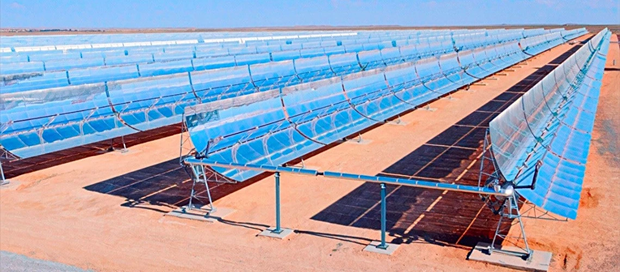
Off-grid solar solutions can significantly expand access to clean energy. In Nigeria, a large off-grid market has developed due to unreliable grid electricity, currently meeting up to 80% of the country’s energy demand. Nigeria aims to deploy 13 GW of off-grid solar by 2030. Other countries are expected to follow, with the World Bank’s ESMAP program projecting that nearly half a billion people will rely on mini-grids by 2030.
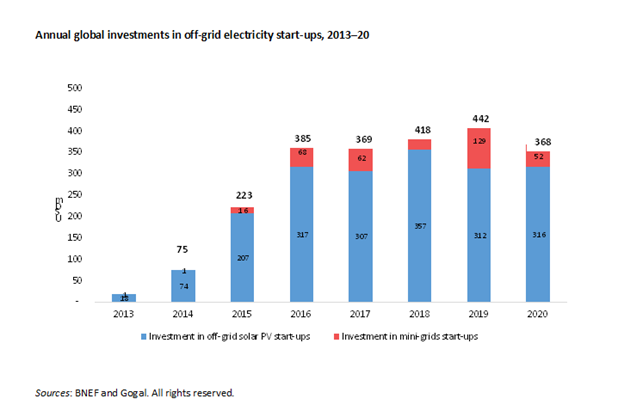
The structure and relative novelty of the off-grid market create both challenges and opportunities for private investment.
“Blended finance can de-risk pioneering transactions and support the long-term growth of Africa’s off-grid solar market.”
Linda Munyengeterwa
Regional Industry Director for Infrastructure, Middle East and Africa, IFC
Daybreak
Daybreak, a pioneering provider of off-grid and distributed solar and battery solutions for commercial and industrial customers in Nigeria, offers a valuable case study on how to achieve a bankable financing structure and competitive tariffs for customers.
Daybreak’s financing plan seeks to leverage long-term subordinated debt—partly provided on concessional terms—to de-risk the investment and attract senior commercial debt on more competitive terms. A cost-efficient financial structure ensures the project remains competitive as an alternative to diesel. A successful demonstration of this model can build confidence among commercial lenders to support the market’s scale-up phase. Market projections indicate that Nigeria’s off-grid and distributed solar market could grow tenfold by 2025.
Democratic Republic of Congo (DRC)
The Democratic Republic of Congo (DRC), home to the world’s second-largest population lacking access to electricity, is launching an ambitious mini-grid expansion program. The DRC is spearheading the World Bank Group’s new Scaling Mini-Grids initiative. IFC expects that blended finance, designed to mitigate demand risk, will help mobilize $400 million in capital investment for mini-grids. This investment will support the development of 180 MW of installed solar capacity in the DRC, providing renewable energy to more than 1.5 million new users.
Africa and the Middle East
The Scaling Mini-Grids initiative aims to boost private investment in renewable energy-based mini-grid services by partnering with governments, private investors, and donors across Africa and the Middle East. Similar to the Scaling Solar program, this initiative provides a suite of project preparation activities, transaction documentation, semi-standardized risk mitigation instruments, and a financing package to support the scale-up of mini-grid deployment. Blended finance can be leveraged in pioneering investments to de-risk commercial capital and improve electricity affordability.
The efforts of the World Bank Group, including those under the Scaling Mini-Grids initiative, are helping improve strategic clarity and strengthen the focus on delivering large-scale mini-grid deployment.
Linda Munyengeterwa
Regional Industry Director of Infrastructure Middle East and Africa, IFC
Mobilizing is key to achieving sustainable investment at scale
Despite its potential, blended finance remains volatile and has yet to reach its full capacity. To attract consistent flows of commercial capital, governments, development partners, and practitioners must work together to make private capital mobilization a core part of their strategies. Each stakeholder needs to prioritize approaches that are scalable and replicable. By deploying blended finance through a platform-based approach, IFC’s Mini Grid Acceleration initiative and similar programs can help drive increased investment in renewable energy across low-income countries.