Attracting investment for sustainable, low-emission agri-food systems in Asia through the carbon market
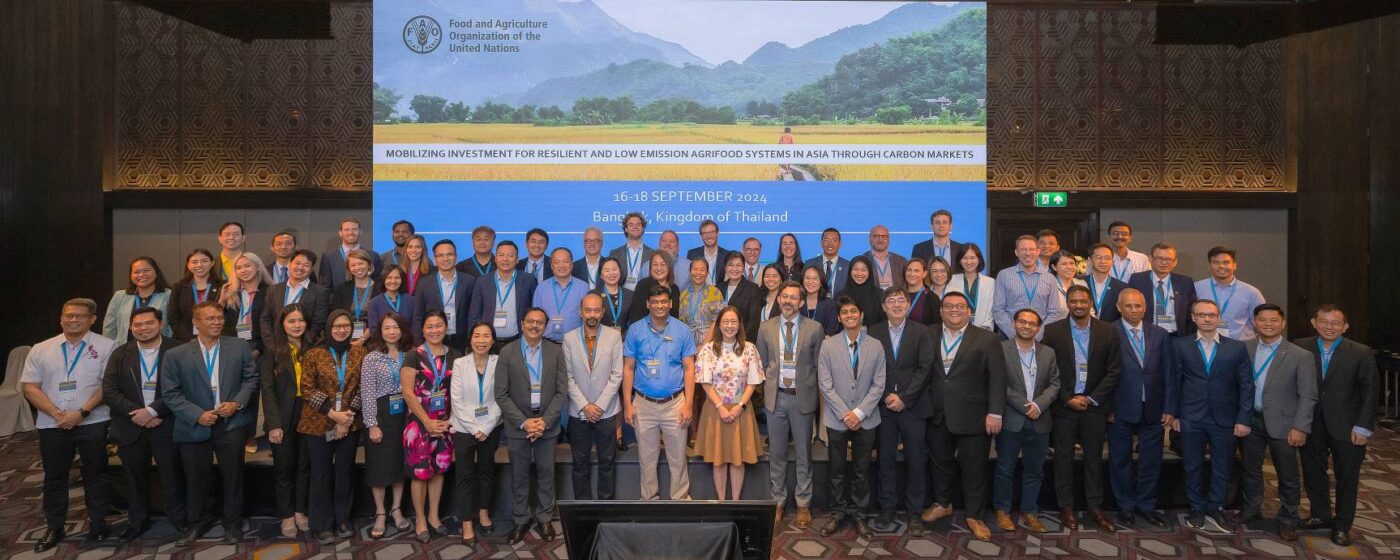
A regional workshop on the potential of carbon markets to drive investment in low-emission agri-food systems was successfully held over three days in Bangkok, Thailand, concluding on September 18, 2024. The event brought together a wide range of experts from across Southeast Asia.
The workshop was organized by the Food and Agriculture Organization of the United Nations (FAO) in collaboration with the Institute for Global Environmental Strategies (IGES) and the International Rice Research Institute (IRRI), with participation from representatives of the World Bank, the United Nations Framework Convention on Climate Change (UNFCCC), as well as non-governmental organizations (NGOs) and advisory institutions such as the Global Green Growth Institute (GGGI), Klik Foundation, RIZE, and relevant government agencies.
IRRI was represented by Katherine Nelson, Climate Change Scientist at IRRI Vietnam Office; Bjoern Ole Sander, Thailand Representative and Senior Scientist at IRRI Thailand Office; and Amber Sharick, Sustainable Finance Specialist at IRRI Vietnam Office, who shared in-depth insights on climate change and sustainable finance in agriculture.
The workshop took place following COP28, where food systems were recognized as a critical component in combating climate change and achieving the goal of limiting global warming to 1.5°C. Article 6 of the Paris Agreement, a voluntary cooperation mechanism between countries, was discussed as a promising pathway to attract investment and incentivize emissions reductions. The event featured a series of sessions focused on raising awareness and sharing knowledge among agricultural and rice-sector development organizations.
Technology companies such as Regrow, Boomitra, and CarbonFarm introduced advanced solutions for monitoring, reporting, and verification (MRV) to accurately measure greenhouse gas emissions. Meanwhile, IRRI shared its expertise in MRV and supported partners in implementing greenhouse gas mitigation projects.
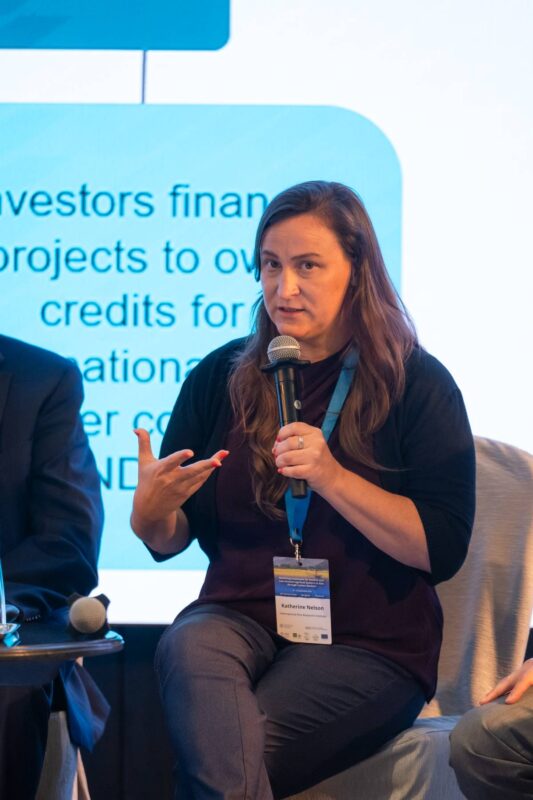
Participants agreed that MRV plays a critical role in implementing emissions reduction commitments under Article 6 of the Paris Agreement. However, developing standardized and practical MRV methodologies remains a challenge. As Dr. Katherine Nelson noted, “A harmonized approach to emissions quantification is needed to avoid unnecessary complexity and ensure the economic feasibility of projects.”
In subsequent discussions, Bjoern Ole Sander raised important questions about the practical application of MRV methodologies. He emphasized that, in addition to developing standardized approaches, providing clear and accessible guidance for farmers is essential. This would not only ensure data accuracy and consistency but also facilitate farmers’ participation in carbon markets.

Issues related to ownership and the right to sell carbon credits remain highly debated. Specifically, who holds the rights to these credits—the actors directly implementing emission reduction activities or the entities financing the projects? And does ownership automatically confer the right to sell? These questions remain unresolved at the national level across the region.
The cost of MRV is a major barrier to implementing agricultural mitigation projects. Allocating these costs is particularly challenging: consumers are often unwilling to bear higher product prices, while farmers already face significant financial constraints. Determining who should bear MRV costs and how to minimize the financial burden on stakeholders are critical issues that need to be addressed.
RIZE introduced an innovative financing model offering concessional loans to rice farmers. Under this model, farmers pay low interest rates only when they achieve successful harvests and meet greenhouse gas reduction criteria.
Participants also discussed the potential of financial mechanisms to promote climate-smart agriculture and develop a roadmap for carbon credit markets in the rice sector. A key challenge is achieving consistency in data collection and encouraging smallholder farmers to adopt sustainable farming practices. Establishing a unified and transparent data system will be essential for advancing this market.
Source: IRRI
CARBON CREDIT TRADING PLATFORM ASEAN (CCTPA)
Address: Léman – 20 Truong Dinh, Xuan Hoa Ward, Ho Chi Minh City
Hotline: (+84) 28 6272 5889
Email: info@aseancarboncredit.com